
Almost a month into the season, the ABS challenge system has been at the forefront of
conversations. It seems like every day there’s a new moment sparking debate about how it’s
working in real time. At its core, the ABS challenge system is designed to bring more accuracy and fairness to ball-strike calls. However, the process of initiating a challenge is quickly becoming the system’s weakest link.
Right now, players signal a challenge by tapping their head. On paper, it’s simple. On the field,
it’s proving to be anything but.
Players naturally touch their helmets or hats dozens of times per game. Adjusting gear, wiping
sweat, or simply resetting between pitches are all routine habits. When one of those motions
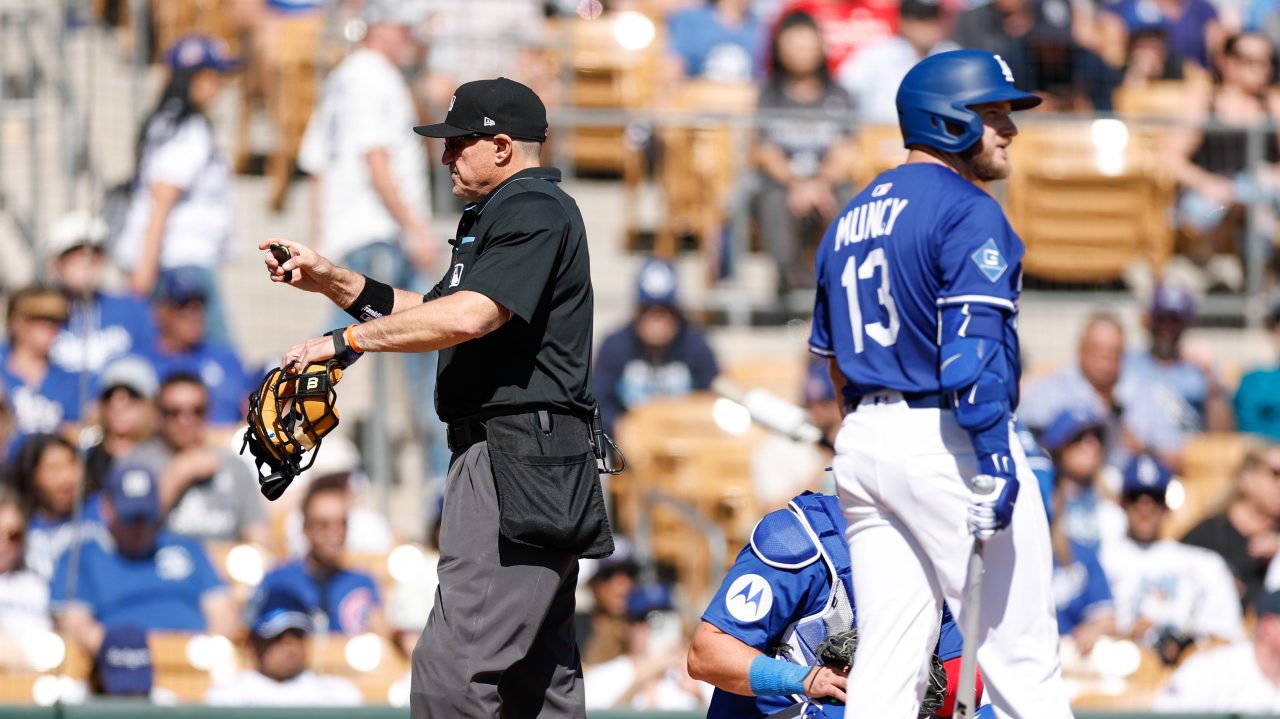
doubles as an official challenge signal, things can get messy fast. That concern recently surfaced in a moment involving Shohei Ohtani and catcher Will Smith, highlighting just how easily miscommunication can occur.
It’s the kind of split-second misunderstanding that highlights a bigger issue — there’s too much
room for interpretation in a system that’s supposed to be precise. And it’s not just player-to-player confusion. There are also instances where umpires are getting involved in ways that raise eyebrows.
That adds another layer to the problem. If the signal itself isn’t clear or consistently recognized,
it opens the door for disputes. Not just about the call, but about whether a challenge was even
initiated in the first place. Veteran MLB player Justin Turner echoed that frustration, offering a creative solution:
Turner’s suggestion might sound humorous at first, but it speaks to a real need: a deliberate,
unmistakable action that separates routine behavior from an official decision. The NFL
comparison is particularly fitting. Throwing a challenge flag is intentional, visible, and nearly
impossible to confuse with anything else.
There’s no ambiguity. When the flag hits the ground, everyone knows what it means. That’s exactly what the ABS system currently lacks. The goal of ABS is to remove doubt from ball-strike calls. But if the act of challenging those calls is unclear, the system risks undermining its own purpose. A limited number of challenges per game means every one matters, and no team wants to lose one because of a misunderstood gesture.
The league now faces an interesting dilemma. Do they stick with the current system and hope
players adjust? Or do they proactively refine the signal before these “accidental” challenges
begin to impact outcomes in meaningful games?
A revised indicator doesn’t have to be theatrical, but it should be distinct. Whether it’s a verbal
cue paired with a gesture, a hand signal that isn’t commonly used during play, or even
something closer to Turner’s “hanky” idea, the goal is the same: eliminate doubt.
Because while ABS is meant to remove human error from ball-strike calls, it’s ironically
introducing a new kind of human error in how those calls are challenged. And if the first few weeks are any indication, that’s a problem worth solving sooner rather than later.