
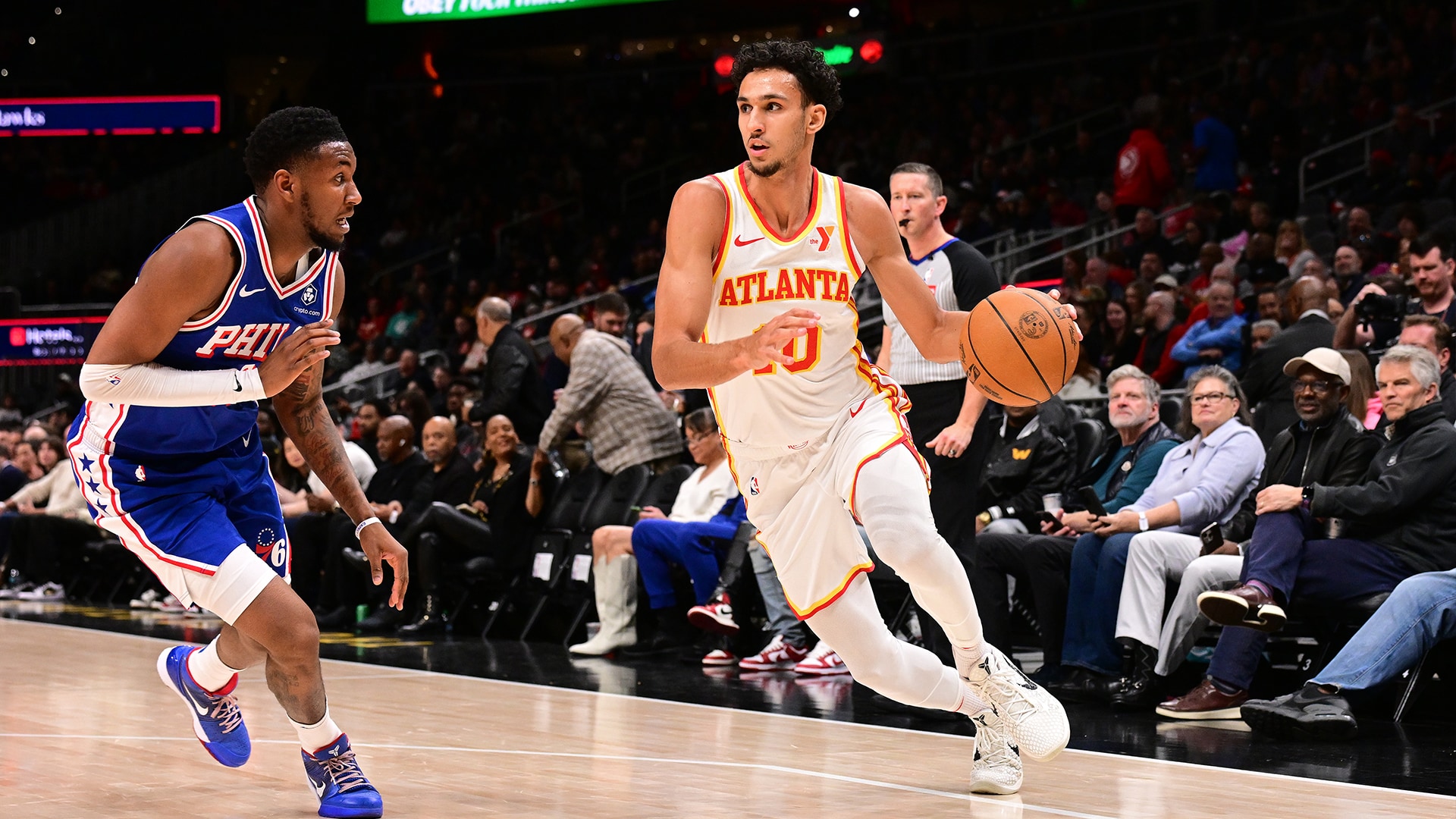
This past Sunday, the NBA Draft Lottery took place, and with roughly a 10 percent chance of landing the first overall pick for the second time in three years, the Atlanta Hawks ultimately landed the No. 8 selection in the 2026 NBA Draft. While the top pick would have been ideal in a strong class, Atlanta instead finds itself in a familiar position, outside the top tier but still in range to add meaningful talent.
The organization is coming off another season that showed promise but ended short of expectations, including a first-round playoff exit. With that in mind, this draft represents an important opportunity to build around a developing core and continue moving forward.
It’s also impossible to ignore the context of the 2024 draft, when Atlanta selected Zaccharie Risacher with the No. 1 overall pick. While it is still far too early to label him definitively, early returns have left some fans questioning his long-term impact. There is still time for growth, but the pressure to get this draft right is real.
With two first-round selections, No. 8 and No. 23, the Hawks have flexibility. The key question is direction.
Team Needs
The Hawks finished the regular season strong, fueled by a stretch of high-level play from a group that was not expected to carry the load. Even after a difficult playoff exit, the organization believes it has a foundation in place.
Jalen Johnson’s breakout season has positioned him as the centerpiece of the franchise. His versatility, size, and ability to impact the game in multiple ways make him the clear focal point moving forward. Alongside him, Onyeka Okongwu continues to develop into a reliable two-way presence in the frontcourt, while veteran guard CJ McCollum provides leadership and stability. Beyond those three, however, there are clear needs.
The most pressing areas are at shooting guard, center depth, and eventually a long-term solution behind McCollum. The Hawks need perimeter scoring, defensive versatility, and additional size to compete consistently against elite teams.
Who Will Be Available
The 8th Pick
The 2026 draft class is widely viewed as one of the deeper groups in recent years. That said, the top tier appears relatively set. AJ Dybantsa, the freshman forward out of BYU, is widely expected to be the No. 1 overall pick. Behind him, names like Darryn Peterson, Cameron Boozer, and Caleb Wilson are projected to round out the top four.
For Atlanta at No. 8, that means the elite tier will almost certainly be gone. Just outside that group, however, are players with significant upside. Darius Acuff Jr. and Keaton Wagler are two names that have gained attention following strong performances, particularly during the NCAA Tournament. While it is unlikely either falls to No. 8, they represent the type of high-ceiling talent teams in this range covet. By the time the Hawks are on the clock, the expectation is that guards will dominate the selections in this range. Teams drafting in the 6–10 range all have backcourt needs, and this class offers several intriguing options.
At No. 7, Sacramento is expected to select Kingston Flemings, which would leave Atlanta choosing between Mikel Brown Jr. out of Louisville and Brayden Burries from Arizona. Both have room for growth but Brown stands out as the more polished offensive player. He has already shown the ability to take over games, including a 45-point performance last season where he knocked down 10 three-pointers. While questions remain regarding turnovers and defensive consistency, his offensive ceiling is undeniable. Burries, on the other hand, brings energy, athleticism, and flashes of high-level scoring ability. While slightly less refined, his upside is still considerable.
There is also the possibility of Atlanta targeting size with a player like Aday Mara. At 7’3”, he offers a unique physical profile and is extremely skilled, but selecting a big in this range would likely be more about fit than value. The expectation remains that Atlanta will select a guard at No. 8, someone who can develop behind McCollum while eventually stepping into a larger role.
The 23rd Pick
Atlanta’s second first-round selection gives them flexibility. At No. 23, the Hawks could target frontcourt depth or simply select the best player available. If they choose to address size, several names stand out. Chris Cenac Jr., Tarris Reed Jr., and Henri Veesaar all offer different skill sets.
Reed, in particular, stands out due to his production and impact on a deep tournament run. At 6’10”, he combines size, scoring ability, and polish, making him a strong candidate for a rotational role early in his career.
Veesaar also showed flashes of high-level play, especially when given increased responsibility after the injury to teammate Caleb Wilson. His ability to handle a larger role adds intrigue, though he remains somewhat inconsistent.
If Atlanta chooses to prioritize talent over positional need, Isaiah Evans could be the pick. The 6’6” wing out of Duke brings length, shooting, and versatility. After shooting close to 40 percent from three, Evans profiles as a high-level off-ball scorer with room to grow into a larger role.
Ultimately, this pick will come down to philosophy: need versus value.
Our Predictions
8th Pick: Mikel Brown Jr. | 6’4” Guard | Louisville
23rd Pick: Isaiah Evans | 6’6” Wing | Duke
Final Thoughts
The ideal outcome for Atlanta is simple: draft the best players available and address roster gaps through free agency and development. While fans often focus on positional needs, long-term success is built on acquiring talent. This draft presents an opportunity to do exactly that.
There is always an element of unpredictability in the draft process, and luck plays a role. After falling to No. 8, the Hawks may not have received the outcome they hoped for, but they are still in position to add two meaningful pieces. If they get it right, this draft could be another step toward building a sustainable contender. After a season that showed both promise and frustration, that is exactly what Atlanta needs.