
After winning 94 games and reclaiming the NL East, the Braves enter another crucial offseason with championship aspirations, serious questions and some difficult decisions ahead.
The Atlanta Braves have officially entered another offseason earlier than they would have liked. After a disappointing 2025 campaign that saw Atlanta miss the postseason, the Braves bounced back in 2026, winning 94 games, capturing the National League East and returning to October baseball under first-year manager Walt Weiss. For much of the season, the Braves looked like a team capable of overcoming just about anything. Injuries decimated their starting rotation, several key offensive players struggled to find consistency, and the roster was forced to adapt seemingly every week. Yet Atlanta continued to win.
Unfortunately, the story ended in familiar fashion.
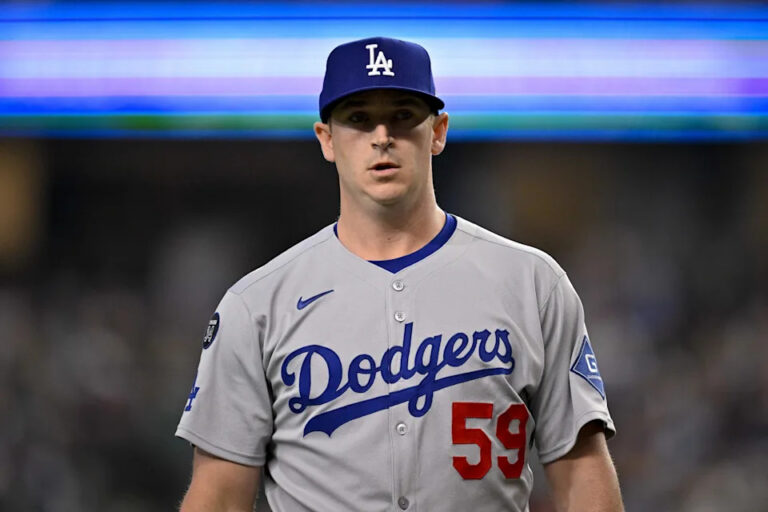
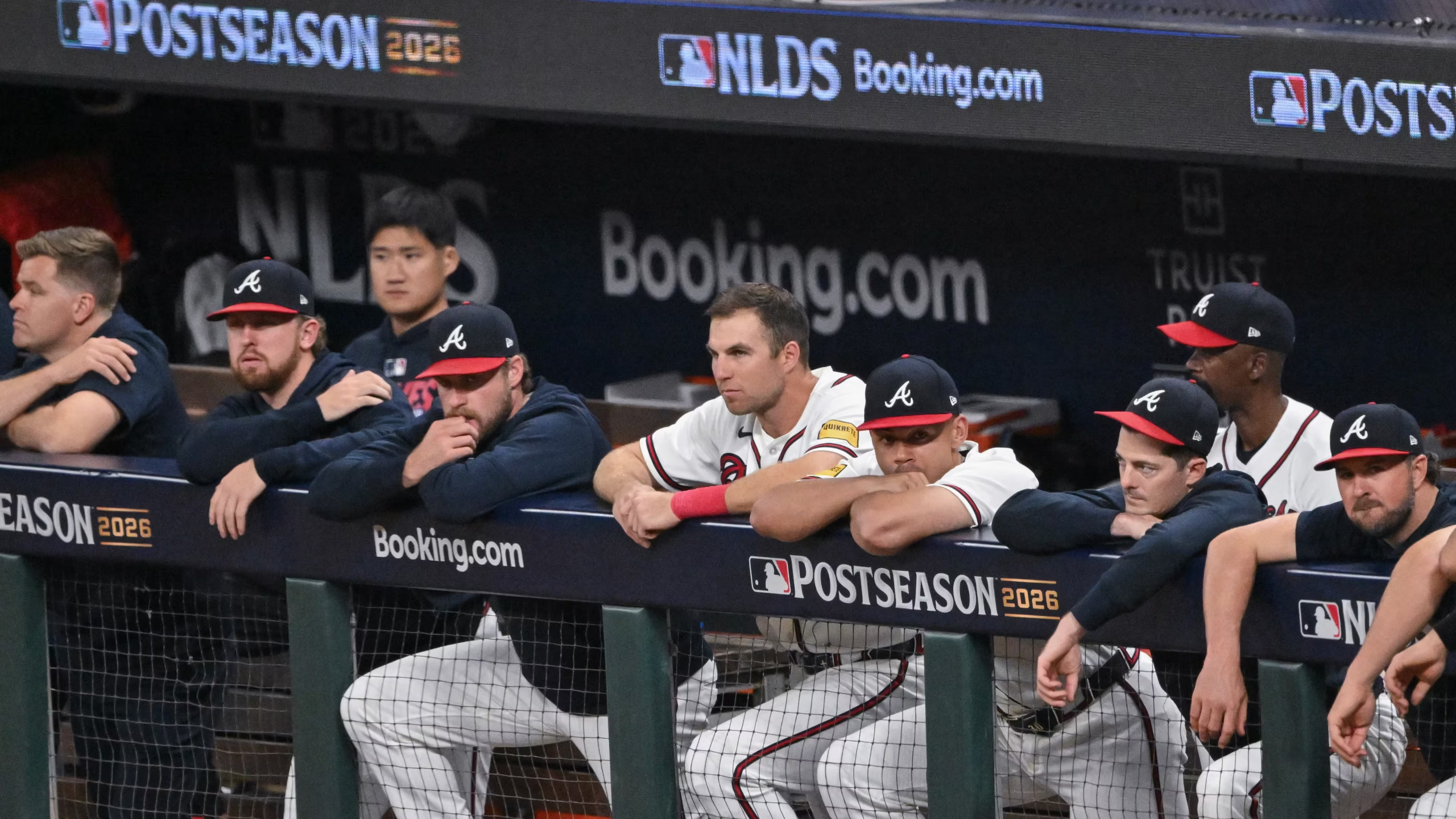
Following a Wild Card Series victory over the Philadelphia Phillies, the Braves fell to the Los Angeles Dodgers in four games in the NLDS, marking another disappointing postseason exit for a franchise that has won just one World Series since 1995. Now, president of baseball operations Alex Anthopoulos faces one of his most important offseasons in recent memory. The Braves still have the talent to compete for a championship. That shouldn’t be up for debate. But after watching another talented Atlanta team fall short in October, it’s becoming increasingly clear that simply running it back and hoping for better results isn’t enough.
So, what should Braves fans expect this offseason?
Let’s break down the biggest needs, potential free-agent signings, realistic trade possibilities and what Atlanta must do to get back to the World Series in 2027.
Looking Back at the Braves’ 2026 Season
Before diving into potential offseason moves, it’s worth acknowledging just how much Atlanta accomplished in 2026. Coming off a 76-win season in 2025, the Braves improved by 18 games, won their division and advanced past the Wild Card round. That’s an impressive turnaround by any measure.
Walt Weiss deserves a tremendous amount of credit for keeping this team competitive despite a seemingly endless list of obstacles. The pitching staff was particularly remarkable. Atlanta entered the season with high expectations for its rotation, but injuries forced the organization to rely on an assortment of veterans, young pitchers and unexpected contributors. Chris Sale continued to anchor the staff, while players such as Bryce Elder, Grant Holmes and late-season acquisition Tyler Mahle helped keep the Braves afloat.
Meanwhile, Atlanta’s bullpen emerged as one of the team’s greatest strengths. But for all the adversity the Braves overcame, the postseason exposed a different problem.
The offense.
Against Los Angeles, Atlanta’s biggest stars struggled to produce. Austin Riley, Matt Olson, Ronald Acuña Jr. and Drake Baldwin combined for just five hits in 58 at-bats during the NLDS. The Braves finished the series 1-for-23 with runners in scoring position. It’s difficult to beat the Dodgers under normal circumstances. It’s nearly impossible when your best hitters aren’t producing.
That’s what makes this offseason so interesting.
Atlanta’s pitching depth was a concern throughout the year, but the offense ultimately deserves just as much scrutiny.
Priority No. 1: Add Proven Starting Pitching
If there is one position group Anthopoulos absolutely cannot afford to overlook, it’s the starting rotation. Chris Sale remains the clear leader of Atlanta’s pitching staff, but beyond the veteran left-hander, there are more questions than answers. Bryce Elder and Grant Holmes have shown they can contribute at the major league level, but expecting either to automatically become a dependable No. 2 starter would be asking a lot.
Then there’s Spencer Strider and Spencer Schwellenbach. Both have tremendous upside, but both are dealing with significant elbow-related concerns. Schwellenbach recently underwent another procedure involving his pitching elbow, while Strider’s recovery remains something the Braves must carefully manage.
Anthopoulos has already acknowledged that Atlanta cannot responsibly enter 2027 assuming either pitcher will provide a full season’s workload. That makes acquiring proven starting pitching a necessity rather than a luxury.
Should the Braves Re-Sign Tyler Mahle?
One of the most obvious candidates is a familiar face. Atlanta acquired Tyler Mahle from the San Francisco Giants during the 2026 season, and the veteran right-hander quickly became one of the Braves’ most important pitchers. Mahle posted a remarkable 1.99 ERA across 54⅓ innings following the trade, giving Atlanta much-needed stability during the final months of the season.
Now, he’s set to enter free agency and a reunion makes plenty of sense. Mahle has already demonstrated that he can succeed in Atlanta, and the Braves know exactly what they’re getting when he’s healthy.
However, there’s one obvious complication.
After his impressive second half, Mahle figures to attract interest from multiple teams looking to improve their rotations. With that said, considering his injury history, Atlanta will have to determine just how much money and how many years it’s comfortable committing.
Personally, I think Mahle should be one of Atlanta’s first phone calls this offseason but bringing him back shouldn’t be the only move.
The Braves Should Explore Adding Two Starters
Even if Mahle returns, the Braves would benefit tremendously from acquiring another established starting pitcher. Atlanta simply cannot afford another season in which injuries force the organization to piece together a rotation on the fly. There is certainly reason to be optimistic about younger pitchers such as JR Ritchie, AJ Smith-Shawver, Owen Murphy and Didier Fuentes.
Fuentes, in particular, presents an interesting dilemma. The young right-hander emerged as an impactful bullpen arm in 2026, but the Braves still believe he possesses the talent to become a starter. The question is whether Atlanta can realistically increase his workload enough for him to contribute consistently in that role next season.
Ritchie and Smith-Shawver also have upside, but neither should be counted on to carry a championship-caliber rotation before earning that responsibility.
The ideal scenario would be for Atlanta to enter Spring Training with enough established pitching that its younger arms can compete for opportunities rather than being forced into them.
Could Atlanta Make a Major Trade?
Anthopoulos has never been afraid to make a significant move when he believes it will improve the roster. That doesn’t necessarily mean the Braves will trade for a superstar this winter, but they should absolutely explore the market. The biggest obstacle is Atlanta’s prospect capital.
The organization has several promising young pitchers, but trading away multiple high-upside arms to address short-term needs could create another problem down the road. That is particularly important considering how much of the Braves’ recent success has depended on developing pitching internally.
A trade for an established, controllable starter would be ideal, but the asking price matters. Atlanta should be willing to move prospects for the right player. However, giving away its best young pitching talent for a short-term rental would be difficult to justify. There is also the possibility of using major league talent to address other needs.
Could Sean Murphy Be Traded?
One name worth watching is catcher Sean Murphy.
With Drake Baldwin establishing himself as Atlanta’s catcher of the future, Murphy’s role has become increasingly complicated. Murphy remains under contract, but the Braves are paying a substantial amount for a player who may no longer have an everyday role behind the plate. Moving Murphy could potentially free up payroll flexibility while allowing Atlanta to address another area of need.
Of course, there’s a difference between a player being available and another organization being willing to take on his contract. Murphy’s recent offensive struggles and injury history could limit his trade value. Still, it’s a situation worth monitoring.
If Atlanta can find a trade that improves the roster without sacrificing significant future value, it would be worth serious consideration.
What Should the Braves Do in Free Agency?
Starting pitching will rightfully receive much of the attention, but Atlanta has several other decisions to make. Among the most interesting are Mauricio Dubón, Raisel Iglesias and the team’s overall infield depth.
Mauricio Dubón Deserves Serious Consideration
One of Atlanta’s most valuable players in 2026 wasn’t necessarily one of its biggest stars.
Mauricio Dubón provided the Braves with versatility, reliable defense and the ability to fill multiple positions when injuries created holes throughout the roster. Players like Dubón don’t always generate headlines, but their value becomes obvious over the course of a 162-game season. His ability to play shortstop also makes him particularly intriguing for Atlanta.
Anthopoulos has publicly expressed confidence in Dubón’s ability to handle the position, which could make bringing him back an appealing option. The question will ultimately come down to cost. Dubón’s versatility should generate interest around the league, and Atlanta must decide whether committing significant money to him makes more sense than exploring alternative options, but after watching the Braves struggle with injuries and roster flexibility, it’s difficult to overlook what he brings to the table.
What Happens With Raisel Iglesias?
The bullpen was one of Atlanta’s biggest strengths in 2026, but that doesn’t mean it should be ignored this offseason.
Veteran closer Raisel Iglesias is among the Braves’ impending free agents. Atlanta must determine whether bringing him back makes financial sense or whether those resources would be better allocated elsewhere.
The development of younger arms, particularly Didier Fuentes, gives the organization additional flexibility. Still, there’s something to be said for having proven late-inning pitching when October arrives.
If the Braves learned anything from 2026, it’s that pitching depth can disappear quickly and having too many reliable bullpen arms is rarely a bad problem.
Austin Riley’s Future Is Becoming a Major Storyline
Perhaps no player enters 2027 with more to prove than Austin Riley.
At his best, Riley is one of baseball’s most dangerous offensive third basemen. From 2021 through 2023, he established himself as a legitimate middle-of-the-order threat and a cornerstone of Atlanta’s long-term plans. Unfortunately, his production has declined considerably since then.
In 2026, Riley finished with an OPS+ of just 80, meaning his offensive production was approximately 20% below league average after adjusting for ballpark factors. That’s a significant concern for a player expected to anchor the heart of the Braves’ lineup. Even worse, unlike previous seasons, injuries weren’t the primary explanation.
The good news?
Riley is still young enough to rediscover the form that made him one of Atlanta’s most important players.
The bad news?
The Braves can no longer simply assume that version of Riley will return.
With his contract running through 2032, Atlanta has every incentive to help him turn things around. But the organization must identify what’s gone wrong mechanically and approach his struggles with urgency.
The Braves don’t necessarily need Riley to hit 40 home runs next season. They do, however, need him to resemble the player who once consistently ranked among the National League’s best hitters.
Ronald Acuña Jr. and the Importance of Staying Healthy
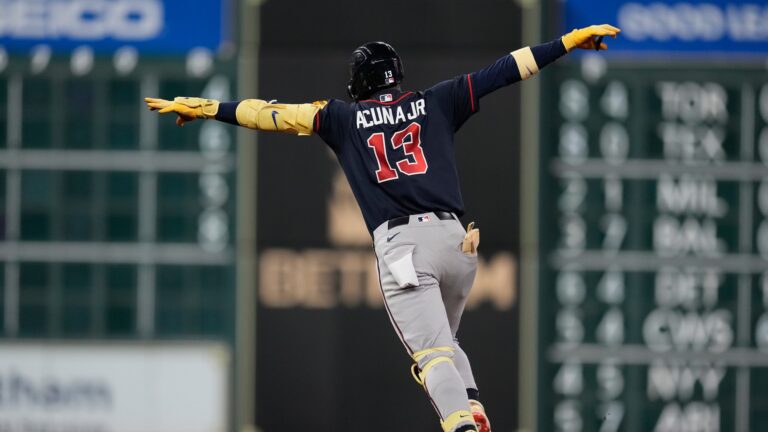
Another major storyline entering 2027 is the health of Ronald Acuña Jr.
When healthy, Acuña remains one of baseball’s most dynamic players. Few hitters possess his combination of power, speed, arm strength and overall athleticism.
Unfortunately, injuries have repeatedly interrupted his career. After suffering two ACL tears, Acuña dealt with additional leg issues during the 2026 season, raising questions about how Atlanta should manage his workload moving forward.
One possibility is giving him more opportunities at designated hitter. That could help reduce some of the physical demands of playing the outfield every day. However, it also creates complications. Drake Baldwin figures to receive designated-hitter opportunities when he isn’t catching, and the Braves must carefully balance their lineup to maximize everyone’s contributions.
Ultimately, Acuña doesn’t need to steal 70 bases again to be an elite offensive player, but Atlanta does need him healthy and productive when the postseason arrives. After another October disappointment, that’s more important than any regular-season individual accomplishment.
While I don’t think the Braves make a move, Acuña’s injuries and struggles at the plate, especially in the Postseason, have many wondering whether this elite talent should be in a Braves uniform next season. The main argument for this trade narrative, outside of just his struggles, is that he only has two years remaining on his contract. Rather than letting him walk, the point could be made to get something in return unlike the Braves did with Fried and Freeman.
What About Ozzie Albies, Michael Harris II and Drake Baldwin?
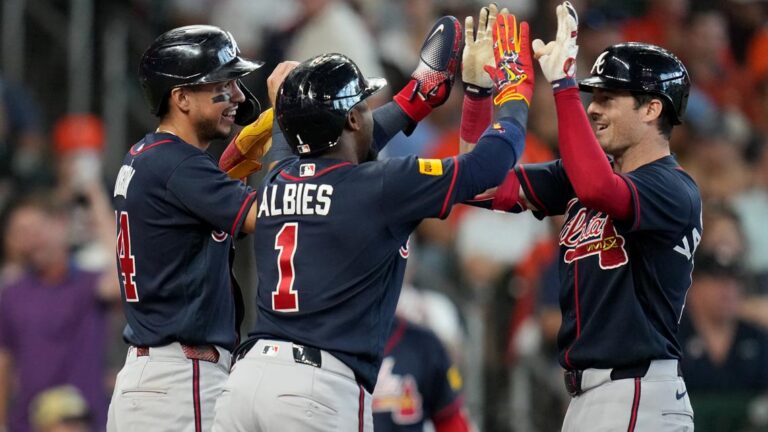
Not every storyline surrounding Atlanta’s lineup is a cause for concern. Ozzie Albies and Michael Harris II were among the Braves’ more encouraging performers down the stretch and into the postseason. Both provided timely offense when several of Atlanta’s biggest names struggled.
Harris, in particular, demonstrated why he remains such an important part of the team’s future. His combination of elite defense, athleticism and offensive upside gives Atlanta one of the more talented center fielders in baseball.
Then there’s Drake Baldwin. Despite his postseason struggles against Los Angeles, Baldwin remains one of the organization’s most exciting young offensive players. His development could play a significant role in determining just how dangerous Atlanta’s lineup becomes over the next several seasons.
The Braves don’t need every player to have a career year in 2027 but they do need more consistency throughout the lineup, particularly when facing elite pitching.
As talented as this offense can be, the postseason has repeatedly shown that regular-season success doesn’t guarantee October production.
What Should Atlanta Do With Jurickson Profar?
One of the more uncomfortable decisions facing the Braves involves Jurickson Profar.
The veteran outfielder is owed $15 million in 2027, the final year of his three-year contract. Unfortunately, his time in Atlanta has been overshadowed by multiple performance-enhancing drug suspensions and injury concerns. The Braves must now determine whether Profar can realistically provide meaningful value next season or whether they need to explore other options.
It’s a difficult situation because Atlanta has already committed significant money to him but at the same time the organization can’t allow a previous investment to dictate future roster decisions.
If Anthopoulos believes the Braves can improve by pursuing another outfielder, he should be willing to explore that possibility. The ultimate goal has to be putting the best possible team on the field.
Three Things Braves Fans Should Watch This Winter
There will undoubtedly be plenty of rumors connecting Atlanta to different free agents and potential trade targets over the coming months. but three developments should tell us the most about where the organization is heading.
First, how aggressively does Atlanta pursue starting pitching?
If the Braves add two proven starters, it would demonstrate that the organization recognizes the importance of protecting itself against another injury-plagued season.
Second, what happens with the team’s veteran free agents?
Decisions involving Mahle, Dubón and Iglesias could significantly reshape the roster and determine how much financial flexibility remains for other moves.
Third, how does Atlanta address its struggling offensive core?
Adding pitching is important, but the Braves also need answers from players already on the roster. Riley must improve, Acuña must stay healthy, and the lineup needs to become more consistent against quality pitching.
Those developments may ultimately matter just as much as any free-agent signing.
Final Thoughts: The Braves Should Be Thinking World Series in 2027
The Atlanta Braves enter the offseason in an interesting position.
On one hand, this is a team that just won 94 games, captured the NL East and advanced to the Division Series despite dealing with a remarkable number of injuries. There are plenty of reasons to believe the Braves can compete again next season.
On the other hand, the standard in Atlanta has changed. Winning the division is no longer enough.
Since winning the World Series in 2021, the Braves have consistently fielded talented teams without producing the postseason results fans have come to expect. At some point, that has to change.
The good news is that Atlanta doesn’t need a complete rebuild. The foundation is still there, Sale remains an ace, and Olson is a proven middle-of-the-order presence. Acuña, Riley, Albies and Harris still give the Braves tremendous upside. Baldwin represents an exciting piece of the future, and the organization has several young pitchers capable of contributing in the coming years. With that said, Anthopoulos has work to do.
The Braves need more dependable starting pitching, better roster flexibility and a lineup that can consistently produce when facing the best teams in baseball.
Perhaps most importantly, they need to enter October healthy.
If Atlanta can address those issues this winter, there’s no reason the Braves shouldn’t be right back in the conversation among the National League’s best teams in 2027,but after another disappointing postseason exit, the pressure is mounting.
The Braves have proven they can consistently win the NL East with this core of players.
Now it’s time to build a roster capable of winning something more.